PCOS
PCOS and PCOD Treatment with Ayurveda
PCOS is a leading cause of infertility. Contact Gynocci before it's too late.
PCOS & PCOD can be managed; all you need is proper guidance. Contact Gynocci today.
Struggling with PCOS?
Doctor-led Ayurvedic PCOS care focused on root cause correction, not symptom suppression.
Book PCOS Consultation || Call Now / WhatsApp
Do you know that in India, PCOS affects 20-25% of women of reproductive age, making it a leading cause of infertility and a few serious health issues?
PCOD, on the other hand, is often used interchangeably, but it refers to a less severe form in which cysts form, but fertility is less affected if it’s timely diagnosed and treated. PCOS and PCOD are both linked to lifestyle factors and can be managed, and that too with the reliable Ayurveda treatment.
Do you know how?
Book Appointment: Call Now / WhatsApp
50+ Clinics | Women-Centric Care | Online + Offline Support | Private Consultations
What is PCOS and PCOD?
PCOS
PCOS stands for Polycystic Ovary Syndrome, and it is a common endocrine (hormonal) and metabolic disorder. PCOS affects women of reproductive age. In Ayurveda, this condition is known as Pushpaghni Jataharini (पुष्पाघ्नी जटाहारिणी). Pushpaghni means "ovum destroyer" in Sanskrit, while Jataharini is a state that interferes with fertility and birth.
In modern science, it is recognized as a chronic metabolic and reproductive condition. PCOS is defined by enlarged ovaries with multiple cysts formation, with irregular, early, or Delayed periods, insulin resistance, elevated androgen levels (male hormone), and a long-term risk of type 2 diabetes, cardiovascular disease, or endometrial hyperplasia.
Artificial Hormonal contraceptives to regulate symptoms and periods, insulin-sensitizing pharmaceuticals like metformin, cosmetic therapies, laser for acne and hirsutism, and fertility meds are among the traditional PCOS therapy options.
These treatments may alleviate symptoms in the near term, but they rarely address the underlying cause of Polycystic Ovary Syndrome (PCOS) and may induce unexpected side effects such as mood swings, weight fluctuations, or medication dependence (no periods without medicines).
PCOD
Polycystic ovarian disease (PCOD) is one of the most common hormonal problems affecting women of all ages, especially those between the ages of 18 and 35. Modern treatment approaches for PCOD emphasize symptomatic treatment and underlying metabolic disturbances through medicine such as
- Metformin (to address insulin resistance)
- Hormonal therapies (including contraceptives to regulate menstrual cycles)
- Anti-androgens (such as Spironolactone for hair growth and acne)
- Ovulation induction agents like Letrozole (for fertility enhancement)
- Myo/D-chiro-inositol (for hormonal regulation), and
- SGLT1/2 inhibitors
Whereas ovarian extraction may be contemplated in severe cases. These are complemented by lifestyle modifications.
However, similar to the condition of PCOS, these medications focus on alleviating the symptoms rather than addressing the underlying cause.
If left unaddressed and not managed appropriately in a timely manner, PCOD may develop into symptoms or complications resembling PCOS, particularly if an unhealthy lifestyle persists, as both conditions involve ovarian dysfunction, irregular menstrual cycles, and hormonal imbalances.
Common Signs of PCOS and PCOD
Symptoms differ from woman to woman, but here are the common ones:
|
PCOD Symptoms |
PCOS Symptoms |
|---|---|
|
Irregular or delayed periods |
Irregular, delayed, or missed periods (often more persistent) |
|
Mild weight gain or difficulty losing weight |
Centripetal Weight gain / stubborn weight (often linked to insulin resistance) |
|
Occasional acne or oily skin |
Moderate to severe acne / oily skin |
|
Hair fall or hair thinning |
Hair fall and hair thinning (can be more noticeable) |
|
Might have mild dark pigmentation. |
Acanthosis nigricans (dark pigmentation around the neck) is most commonly present. |
|
Mild facial hair growth (in some cases) |
Increased facial/body hair growth (hirsutism) |
|
Bloating, heaviness, and digestive issues |
Bloating, metabolism issues, and sweet cravings |
|
Mood swings, irritability |
Mood swings, anxiety, low mood (more frequent in some cases) |
|
Fatigue, low energy (on and off) |
Chronic fatigue, low energy, brain fog |
|
Difficulty conceiving (in some women) |
Difficulty in conceiving / Anovulatory cycles(most common) |
|
Period cramps or discomfort |
Severe PMS, period pain, hormonal swings |
|
Symptoms may improve with lifestyle changes |
Symptoms often require deeper hormonal and metabolic support |
Why PCOS and PCOD Happen? (Ayurveda + Modern Science)
Whether viewed through Ayurveda or modern science, both PCOS and PCOD are more than just a period problem; it’s a whole-body imbalance that needs personalised, root-cause care.
Understanding the Causes of PCOS
Ayurveda considers PCOS to be a more profound and intricate hormonal imbalance due to ama (toxin) accumulation, typically involving all three Doshas - particularly Kapha-related congestion, Vata-related irregularities, and Pitta-related hormonal alterations.
When Ama accumulates, increased Kapha obstructs the channels (Srotoavarodha), thus the reproductive system, mainly the ovaries, experiences a decrease in activity. Simultaneously, aggravated Vata may disrupt the menstrual cycle rhythm and ovulation. If Pitta becomes imbalanced or suppressed, the processes of hormonal conversion and tissue nourishment may be adversely affected.
Blocked channels, disrupted rhythm, and impaired hormonal transformation collectively contribute to PCOS.
Modern science characterizes PCOS as a hormonal and metabolic disorder, frequently involving:
- Raised levels of androgens (male hormones)
- Irregular or anovulatory cycles
- Insulin resistance (frequent, but not universal)
- Persistent inflammation
- Genetic susceptibility
- Stress and lifestyle-related triggers
So in short, hormones and metabolism become disrupted, impacting ovulation and the regularity of the menstrual cycle.
Understanding the Causes of PCOD
In Ayurveda, PCOD is frequently associated with an imbalance of Kapha and Vata, as well as weakened Agni (digestive fire). When digestion and metabolism slow down (Mandagni), the body produces Ama (toxins), which can obstruct the reproductive channels (Artavavaha Srotas). This obstruction may result in irregular menstrual cycles, cyst development, weight increase, and hormonal imbalances.
Impaired metabolism, accumulation of toxins, and obstructed channels result in cycle irregularities and ovarian imbalance.
According to contemporary scientific understanding, PCOD is frequently linked to lifestyle factors and hormonal imbalances, which can lead the ovaries to produce numerous immature follicles as a result of anovulation. Typical contributing factors encompass:
- Unconventional lifestyle and elevated stress levels
- Increase in body weight and a decline in metabolic rate
- Insulin resistance is observed in certain women
- Hormonal imbalance impacting ovulation
- Inadequate sleep and persistent inflammation
Therefore, the body experiences difficulty in ovulating consistently, resulting in hormonal imbalance and thus the formation of multiple immature follicles.
How It Affects Life?
[Real Stories]
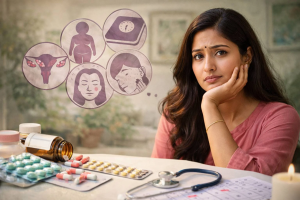
These are just a few stories, but it is well known fact that both PCOS and PCOD can affect:
- Confidence
- Physical appearance
- Relationships
- Fertility planning
- Energy, productivity, mood
- Long-term metabolic health
So, what are you waiting for? Contact Gynocci today for structured, root-focused care and treatment.
Book Appointment: Call Now / WhatsApp
How We Support PCOS/PCOD Care at Gynocci?
In PCOD, multiple follicles begin to grow in the ovary every cycle, but due to hormonal and metabolic imbalance, none of the follicles becomes dominant. As a result, ovulation does not occur regularly, and no egg reaches the fallopian tube, affecting fertility.
Allopathic treatment helps induce ovulation by supporting follicle dominance through hormones, which can be effective but may not correct the root metabolic imbalance in all cases.
Ayurveda herbs such as Kanchnar, shatavari, Ashwagandha, etc, help in improving metabolism, hormonal balance, and ovarian function, also through diet, lifestyle, and therapies. This creates conditions where the body can naturally form a dominant follicle and ovulate, supporting long-term reproductive health.
Gynocci is a structured, doctor-led, diagnosis-driven Ayurvedic fertility care center. We understand that each body is different, and each imbalance is different. Which is why one-size-fits-all does not work here, so here at Gynocci, treatment is customised and natural. First, book a consultation, and then we will plan your return to your fullest.
So, Why Choose Gynocci for PCOS?
- Diagnosis-driven, not generic herbal packages
- Structured fertility-focused protocols
- Hormonal + metabolic assessment
- Doctor-supervised treatment plans
- Lifestyle + digestion + sleep integration
- Continuous monitoring & follow-ups
Your Care Journey at Gynocci
From your first visit to long-term health, Gynocci's care journey is designed to be comfortable, personal, and reassuring – so you're supported every step of the way.
-
Welcome & Registration
You'll be warmly welcomed in a relaxed, female-friendly environment. Registration and filling in basic details are smooth, ensuring your comfort and privacy.
-
Intake & Health Understanding
A well-planned initial consultation helps us understand your symptoms, lifestyle, and health history – allowing you to share your concerns openly without hesitation.
-
Doctor Consultation
Our Ayurvedic doctor will do nadi pareeksha, explain hormonal or dosha imbalances, identify root causes, review diagnostic needs (if any), and outline a personalized care plan.
-
Treatment & Guidance
You receive prescribed medications or treatments, as well as clear diet, lifestyle, and self-care guidance to help you recover even outside of the clinic.
-
Follow-Up & Ongoing Care
Follow-up appointments are scheduled, and you are connected to our care system for ongoing guidance, progress monitoring, and support.
What Improvement Often Looks Like?
Everybody responds differently, and your return may take time, but with Gynocci’s reliable treatment, you will see signs of improvement in your journey of return. These signs will be like:
-
Restore Hormonal and Metabolic Balance - Ayurveda addresses dosha imbalances through Panchakarma, personalized medications, and a tailored diet, facilitating a decrease in ovarian volume, enhanced insulin sensitivity, and the promotion of natural, regular menstrual cycles.
-
Support Reproductive Health and Fertility - Purification of the Artava-vaha Srotas (menstrual channel) enhances ovulatory function. The likelihood of natural conception increases, resulting in reduced reliance on artificial fertilization methods.
-
Maintain Natural Weight Loss - Rather than engaging in novelty diets, Ayurveda focuses on achieving a long-term metabolic equilibrium and enhancing gastrointestinal health (Agni Deepana), leading to inch loss, increased energy, and sustainable weight management without adverse effects.
-
Reduce reliance on medications - by restoring endocrine and metabolic balance, Ayurveda methodically diminishes the need for hormonal tablets and anti-diabetic drugs.
-
Whole Person Healing and Prevention – Ayurveda supports emotional well-being, improves sleep quality, reduces stress, and manages related comorbidities such as insulin resistance and anxiety, thereby preventing the progression to type 2 diabetes and cardiovascular disease.
Choose Your Return with Ayurveda, With Gynocci
Ayurvedic therapy is appropriate for:
- Adolescents experiencing irregular menstrual cycles
- Women preparing for pregnancy
- Women experiencing weight gain or insulin resistance
- Patients reliant on long-term hormonal medication
- Women pursuing natural and sustainable corrective solutions
Treatment is customized to suit each individual's age, symptoms, and reproductive objectives.
FAQs
Is PCOS/ PCOD Reversible?
Yes!! According to ayurveda PCOS/PCOD is reversible; however, it depends on the severity of the condition.
With appropriate Ayurvedic treatment:
- Menstrual cycles get regularised
- Ovulation has the potential to enhance
- Reduction of acne and hair growth
- Metabolic health reaches stability
Ayurveda emphasizes sustained harmony rather than suppression.
Why Weight Loss Is Difficult in PCOS?
Numerous women consume fewer calories yet encounter difficulties in losing weight. The reasons comprise the following:
- Impaired response to insulin
- Kapha–Meda accumulation
- Slow metabolic activity
Ayurvedic therapy primarily aims to restore proper metabolic function and treat the root cause.
Therefore Weight reduction becomes more attainable following the enhancement of metabolic equilibrium.
PCOD or PCOS - Which Condition Is More Severe?
PCOD is typically a functional condition associated with lifestyle factors and frequently shows improvement through dietary modifications, physical activity, and basic medical treatments.
PCOS is a comprehensive hormonal and metabolic disorder. It necessitates ongoing management due to its potential impact on:
- Reproductive Capacity
- Blood glucose levels
- Cholesterol
- Cardiovascular well-being
Timely diagnosis and appropriate management are essential in preventing complications associated with both conditions.
Is it possible for a woman with PCOS or PCOD to conceive?
PCOS impacts fertility; however, many women with PCOS or PCOD are able to conceive.
PCOS/PCOD may lead to anovulation, potentially prolonging the time required for conception; however, it does not imply that pregnancy is unattainable. With accurate diagnosis, lifestyle modifications, and individualized medical treatment, many women can conceive naturally or with assisted fertility interventions.
If you have been attempting for an extended period or experience irregular menstrual cycles, it is advisable to seek medical consultation to assess your ovulation health and determine appropriate subsequent actions.
Sources: