Menstrual Health
Menstrual health
Menstrual health is a very important aspect of a woman’s overall health. On a single day, around 300 million girls and women are going through their menstrual cycles, and more than that do not have adequate resources for menstrual hygiene management (MHM). According to Ayurveda, the menstrual cycle is referred to as rutuchakra(Rajahstravkala), which is a 28-day moon-aligned cycle of cleaning and preparing the body for pregnancy.
Menstrual health refers to the total mental and physical well-being of an adolescent woman. Keeping menstrual hygiene keeps you healthy, comfortable, and odor-free during your menstrual cycle (also called “period”).
What is the Menstrual cycle?
Menstrual cycle or a period can be defined as a natural process in which blood, along with tissue and internal lining of the uterus, flows out of your body through the vagina. The cycle lasts from 21 days to a maximum of 35 days. It prepares the female body for pregnancy.
This complete process is widely driven by hormones releasing from the HPO axis . These hormones lead to the process of ovulation, in which the ovaries start releasing the egg from follicles. Simultaneously, hormones also cause the uterus lining to thicken known as endometrium so that if fertilization takes place, the egg can be implanted on the endometrium lining of the uterus. The eggs that are released from the ovaries travel through the fallopian tubes and wait to be fertilized by a sperm. If the egg is not fertilized hormones get negative feedback and thus the lining of the uterus sheds off in the form of Menstruation (periods)
The menstrual cycle is divided into 3 phases-
- The follicular phase- During this phase, estrogen level rises, causing the thickening of the Endometrium lining within the uterus. Another hormone called the follicular-stimulating hormone (FSH) starts developing multiple follicles to grow in the ovary. It starts from day 1 to 13 in a 28-day cycle.
- Ovulation- On the 14th day of the cycle,Increased level of luteinizing hormone (LH) causes the ovary to release an egg from the follicle. This process is called ovulation.
- The luteal phase- In this phase (from day 15 to 28) +after the follicle ruptures and the egg comes out the left over part corpus luteum secretes hormones such as progesterone and estrogen. This egg therefore travels through the fallopian tube to reach the uterus and waits for the sperm to fertilize. The uterus gets prepared for pregnancy. When the sperm fertilizes the egg forming the embryo, this embryo gets implanted into the thickened lining of the uterus known as endometrium. If the egg is not fertilized, the endometrium lining and egg shed off marking the end of the luteal phase and start of the menses phase.
On average, girls start menstruating at the age of 12. But some people can start menstruating as early as 8 years old or as late as 16 years old.
Why is menstrual hygiene important?
Menstrual health is a very important part of a woman’s life, because it keeps all other aspects intact, be it physical, mental, or social wellness. About 50 % of women aged 15–24 years in India report using cloth as a method of menstrual protection which is considered to be the unhygienic method. At the time of menstruation, the female body becomes more sensitive and more prone to infections. In Ayurveda, menstrual hygiene is called Rajaswala Paricharya in which hygiene is necessary because it is seen as a cleaning process and detoxifying process rather than a monthly cycle. Maintaining hygiene supports this process and keeps the chances of infections and diseases minimum, and also ensures future health.
Also, talking about periods is not accepted in a lot of societies, and that makes sharing about the pain and the problems very difficult. Women also stress a lot and feel uncomfortable because of the fear of odor and wetness all the time. That is when hygiene and cleanliness play an important role. The two main health problems that are faced due to poor hygiene and health are-
- Physical issues- Physical illnesses like Urinary tract infections (UTIs) and vaginal infections are the two main illnesses related to poor hygiene during menstruation. Poor menstrual hygiene also has its effects on reproductive health, and ignorance can lead to infertility.
- Psychological issues- During periods, most women feel a lack of confidence and are demotivated, going out or doing anything because of the fear of bad odor and feeling wet. So, the availability of menstrual health products gives the comfort and self-confidence they need.
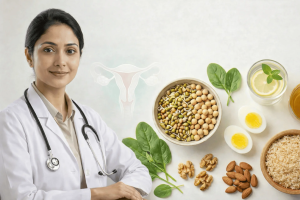
Ayurvedic holistic approach ensures a healthy reproductive cycle. It focuses on balancing doshas through herbs and recurrence of the issues, a healthy diet, and lifestyle changes. Herbs like Shatvari provide nourishment to the reproductive tissue, Ashoka and Lodhra help maintain heavy flow and uterine health, and Triphala is used for detoxification, managing vaginal PH and helps in digestion to relieve toxins . Along with these, a balanced diet, Abhayanga, and Yoga also help maintain menstrual health.
So overall, maintaining menstrual hygiene builds confidence, gives comfort, and supports mental and physical well-being. Periods are normal, and taking care during periods is normal too. During menstruation, using menstrual products is not important; Choosing the right ones is important. There are sanitary pads, menstrual cups, tampons, etc., that help with odor, wetness, etc., and boost confidence in public.
Challanges
Educating women and spreading awareness among them about the menstrual cycle, hygiene, and the use of menstrual products is the actual key to their overall health. Educated women know what products are good for them and how to use them.
In many parts of the world, the availability of menstrual products is still an issue. 500 million women have no access to menstrual products around the world. Spreading awareness, making menstrual products available, and educating people to normalize menstruation will empower women and break the taboos associated with menstruation.
Menstruation is not an issue; it is a very normal process experienced by every single woman. During menstruation, certain things should be taken care of, like personal hygiene and cleanliness around yourself, to ensure good menstrual and reproductive health. Choosing menstrual products wisely, making them available, educating women, and spreading awareness among everyone regarding it ensures women’s rights and comfort in society.
If you have any complications related to your menstrual cycle, like irregular periods, unusual blood flow, or any problems regarding your periods, it is best that you talk to a doctor who is a female healthcare specialist and remember to maintain cleanliness and hygiene.
Treatment in Ayurveda?
In Ayurveda, doshas play an important role in regulation of the menstrual cycle. Their imbalance can cause discomfort, pain, heavy bleeding, irritation, menstrual blood clotting and mood changes. So, Ayurveda provides a holistic approach and helps balance the doshas. The three doshas are Vata, Pitta and Kapha which can be balanced by diet and other herbs and Ayurvedic procedures.
Balancing the doshas with diet
Vata- Eating warm foods and staying hydrated with warm water and herbal teas help balance Vata dosha.
Pitta- Sweet and bitter foods are best to balance Pitta. Avoiding spicy, salty, and sour foods is necessary to balance pitta.
Kapha- Drinking ginger tea and other herbal teas and keeping your body hydrated keeps Kapha balanced.
Ayurvedic procedures and medication
Ayurvedic procedures such as Panchkarma, which is used to detoxify the body using Virechana and Basti, helps a lot in balancing the doshas. Medicinal herbs like Ashoka, which is known as uterine tonic helps in heavy bleeding and discomfort during periods, Shatavari balances hormones and provides nourishment to the reproductive system, Lodhra helps manage abnormal bleeding, Ashwagandha also balances hormone and balances hormone levels.
Along with the medications and procedures Yoga plays a vital role in maintaining overall health. Pranayam like Dhanurasan, Ustrasan, Baddha konsana (butterfly pose) are helpful in pelvic circulation, ovarian function and stimulating endocrine gland.
Why Choose Gynocci?
Here at Gynocci we have the best Ayurvedic health care experts and infertility experts whom you can consult about your problems. You get personalized consultation, diet and stress management. All the ayurvedic and modern medicines are available here to help you be comfortable during your cycle. We ensure each patient gets a healthy reproductive life and faces no problems with fertility.
At Gynocci we treat the root cause rather than symptoms of the disease with Ayurveda, lifestyle modification and yoga. So if you feel if you have any problem related to menstrual cycle, your reproductive life or fertility then you can consult our healthcare expert.
FAQs
Is menstrual health a human right?
Yes, in Article 21, menstrual health comes under the right to life in the Indian Constitution.
Can we get intimate with someone during menstruation?
No, having sex during menstruation is not at all good because it can lead to complications like sexually transmitted infections.
Why is menstrual health important?
It is important to reduce the risk of any kind of UTIs and healthier reproductive life.